Roof problems can be sneaky. Most winter roof damage starts long before the first snowfall. Lifted shingles and loosened flashing might not be huge issues when they happen in the summer or fall, but just wait. Winter weather will compound the issue if you let it.
Freezing water, ice, and the weight of snow cause the little blemishes to become big problems.
Signs of Roof Damage That Are Easy to Miss Before Winter
Common starting points for those “small” problems include:
- Lifted, cracked, or missing shingles
- Granule loss on older shingles
- Loose or cracked flashing around chimneys, vents, and skylights
- Gutters full of leaves and debris
- Nail holes or broken shingles from hanging holiday lights
Most of these signs of roof damage are hard to spot from the yard. And they don’t necessarily announce themselves with a drip. A pair of binoculars from the ground is a safe way to take a look once roofs get icy. No need to get the ladder out yet.
Already spotted something and decided it could wait? Here’s what can happen if you put off roof repair.
Stage 1: Freeze-Thaw Cycles Widen Small Openings
Water finds its way into cracks and gaps, then freezes. Water expands as it turns to ice, so it pushes those openings a little wider. When the temperature climbs, the ice melts, more water seeps in, and the problem compounds.
Maryland weather has never been great at making up its mind. A single winter here can swing above and below freezing again and again. Each swing gives that water another shot at a weak spot. This is how a hairline crack becomes the first piece of winter roof damage.
Cold also changes the shingles. It can make shingles brittle and prone to cracking, so a shingle that’s already damaged is more likely to crack further.
Stage 2: Ice Dams Find the Weak Spots
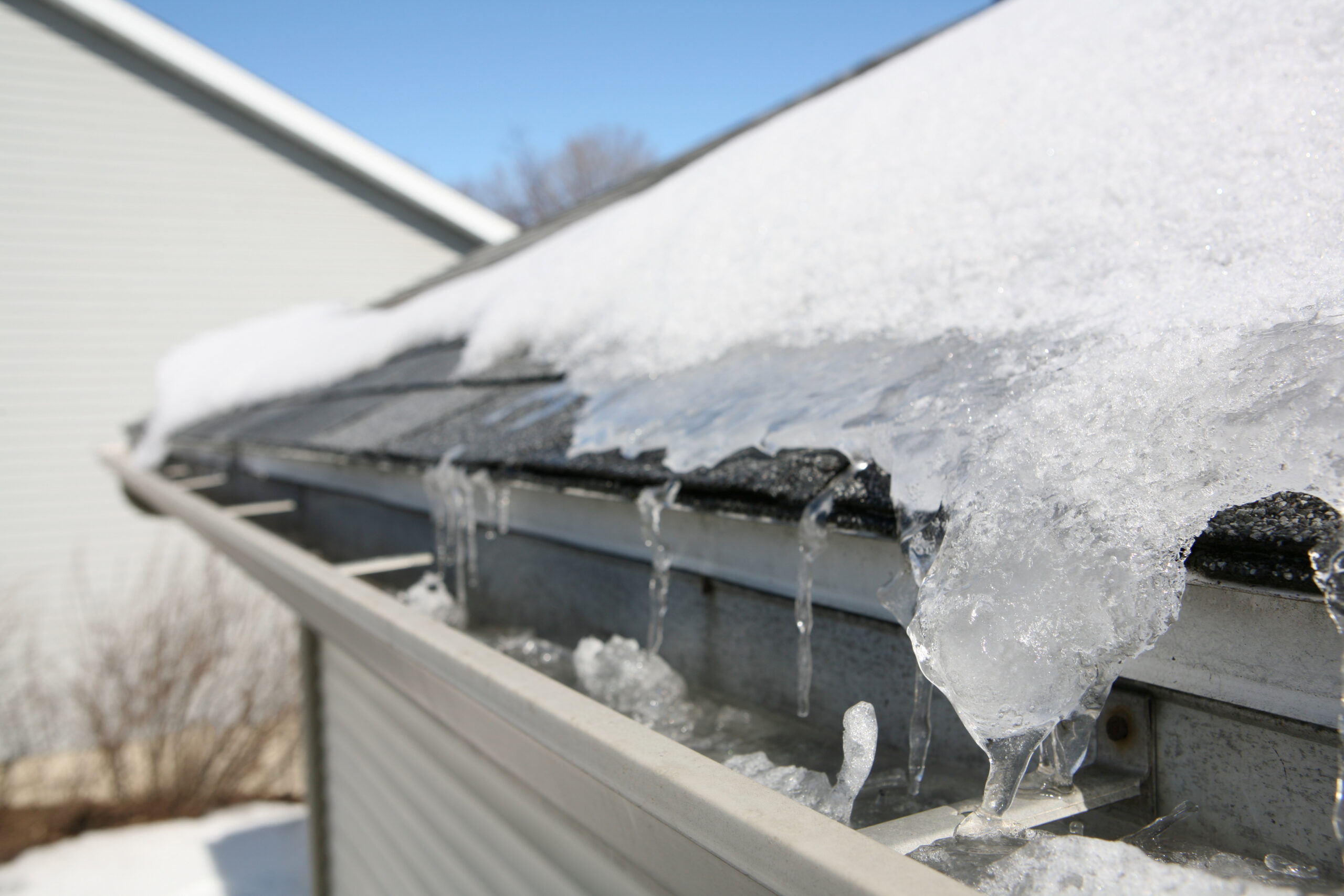
Ice dams start in the attic. Heat that escapes into the attic melts snow on the roof. That water runs down to the colder eaves, refreezes, and builds a ridge of ice that holds back the next round of meltwater. The trapped water can back up under the shingles and leak into the ceilings and walls below.
If a shingle is already lifted or the flashing is already loose, it’s basically an invitation for the water to come in.
Because ice dams begin with escaping heat, attic insulation and ventilation are part of the solution. Fixing ice dam damage usually means looking at the attic and the roof. We’ve got plenty of thoughts on that subject alone.
Clogged gutters add to the problem. The National Weather Service recommends keeping gutters clear all winter so meltwater has somewhere to go. Otherwise, ice dams form at the edge of the roof, right where the gutters sit.
Stage 3: Snow Adds Weight
A handful of snow might be light and fluffy, but the amount of snow that collects on any given roof is hefty, to say the least. If it’s packed snow or ice, the number goes up further. That weight sits on the whole roof, including spots weakened by earlier damage. Spots that may have been fine… before they were being crushed by the weight of that signature winter weather.
How Much Snow Can a Roof Hold?
This is like asking how much weight a person can lift. It depends on build and strength. In this case, the roof’s design, age, and condition. A typical roof can handle about 20 pounds per square foot of snow. If it’s an older roof, that number might be lower.
So how quickly does the weight add up?
| Snow or ice on the roof | Approximate weight per square foot |
| 10 to 12 inches of fresh snow | About 5 pounds |
| 3 to 5 inches of packed snow | About 5 pounds |
| 1 inch of ice | About 5 pounds |
In other words, a few inches of ice can weigh as much as several feet of fresh snow. Sagging roof sections and doors that suddenly pop open are signs a roof is under stress. If you notice these signs, your safety comes first. Leave the building and have it inspected as soon as you can.
If snow does need to come off, keep your feet on the ground. A roof rake lets you pull snow from the edge (and it’s really fun to use). Shave it down to two or three inches instead of scraping down to the shingles; this can damage them and add to winter roof damage that may already be there.
Stage 4: The Damage Shows Up Inside
A roof leak in winter usually shows up last. Before water reaches a ceiling, it’s already worked through the roof deck, attic, and insulation. That’s true whether it came in through a cracked shingle, loose flashing, or ice dam damage at the eaves. Wet insulation stops doing its job, and over time water can rot wood and encourage mold.
Water Stains on the Ceiling and Walls
Discolored patches and stains are often the first signs homeowners see. Other signs include:
- Bubbling or peeling paint
- Damp spots on walls
- A musty smell
If you can get into your attic safely, check for damp or matted insulation, trails of water, frost on nail tips or sheathing and nail pops, and dark spots on the underside of the roof deck. For a full rundown, see our post on how to identify a roof leak during the winter months.
Found Winter Roof Damage? Here’s What Comes Next
If you already have a roof leak in winter, stop the water before anything else. A tarp or temporary patch can protect your home until a permanent repair is made. On an icy roof, that’s work for a crew with the right safety gear. Please don’t climb up there yourself! PJ’s offers emergency tarping and will ensure the leaking area is watertight before the permanent repair (whether repair or replacement) can be made.
From there, the question is whether to repair now, wait for spring, or replace the roof. Some repairs can hold until warmer weather. Others shouldn’t wait. Our estimators are tradesmen, not salesmen, so you’ll get a straight answer about which one you’re dealing with, even when it results in a smaller job for us.
Can You Replace a Roof in Winter?
Yes, with some planning. Modern materials and installation techniques let us replace roofs in cold weather. Every roofing product has a minimum installation temperature, so a winter project calls for a few extra steps:
- Scheduling early
- A crew experienced with cold-weather installs
- Proper material storage
- Extra time for weather delays
Learn more about our residential roof replacement and repair services.
A Quick Word on Insurance
Insurance coverage often depends on how the damage happened. Progressive notes that ice dam damage may be covered when it’s sudden and accidental. On the other hand, damage that develops gradually from poor maintenance typically isn’t. Policies vary (you know the deal with insurance), so check yours or talk with your agent. A recent roof inspection can also document your roof’s condition before a storm hits.
Schedule a Roof Inspection With PJ’s Roofing
Most winter roof damage is easier to fix when it’s caught early. If you’ve noticed any signs of roof damage, or you’d like a second set of eyes before the next freeze, give us a call.
We’re a family-owned roofing contractor that’s served Frederick for more than two decades. We’ll tell you what your roof needs and what can wait. Get in touch and we’ll take a look.
Stay warm out there!