
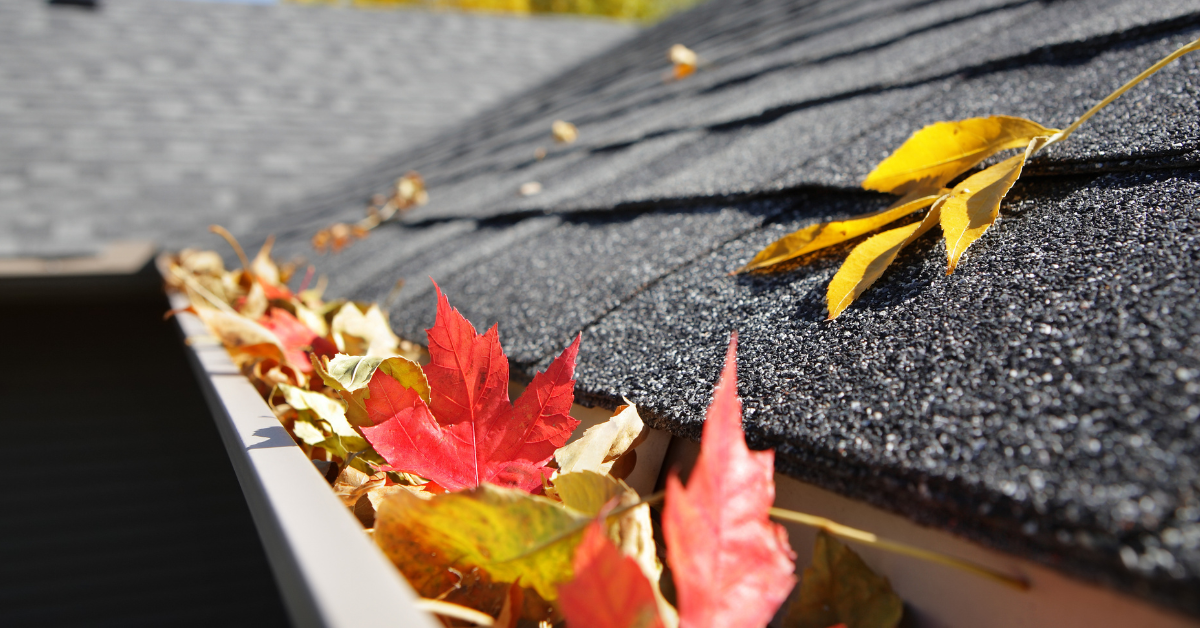
Gutters are the drainage system built into your roofline, and when clogged gutters back up the damage lands above the yard as much as in it. Fall leaves are the single biggest cause of gutter clogs. Skipping your autumn cleaning might save time today, but it often leads to fascia rot, shingle damage, and costly foundation problems by spring. So let’s get into the muck. Here’s what happens when gutters clog, the signs you should watch for, and when the fix calls for professionals like yours truly.
What Happens When Gutters Clog
Clogged gutters trap leaves and debris, which stops water from draining off the roof and forces it back up under the shingle edge.
Leaves in gutters may look like they’re just sitting there, but they’re doing a sort of invisible damage. Once they collect, they form a dam that blocks the channel, and water that would normally drain off the roof edge starts backing up under the first course of shingles. That standing water doesn’t dry out on its own, especially once more leaves and grit pile on top of it through the rest of the season.
Wet leaf debris also adds weight. A gutter built to carry rainwater wasn’t designed to hold saturated leaf mulch for weeks at a time. The extra load can pull hangers loose or bend the gutter away from the fascia board it’s attached to. In short, your poor gutters are under constant strain.
What happens if you don’t clean your gutters through a full fall season is usually a problem that happens in slow motion. Overflow that should have been carried away from the house instead lands at the foundation, and a roof drainage issue turns into a basement or crawlspace issue before anyone traces it back to the gutters.
The Damage Nobody Sees Until It’s Expensive
Fascia and Soffit Rot
Constant saturation at the roof edge soaks wood that wasn’t built for all that wetness. Once rot sets in, replacing fascia and soffit becomes a carpentry job on top of whatever roofing work follows it.
Shingle Edge Deterioration
Backed-up water works its way under the first course of shingles and into the underlayment beneath them. This is the layer that’s supposed to stay dry no matter what happens on the surface above it.
Ice Dams in Winter
Frederick County’s freeze-and-thaw cycles turn standing gutter water into ice through the colder months. It forces melting snow up and under the shingle edge, and it starts with the same clogged gutters that caused trouble back in the fall. Slow motion problems, indeed.
Pests and Growth
Wet leaf debris is nesting material for pests and a growth opportunity for mold and mildew. Both have a way of working into the roof structure over time.
It doesn’t take a worst-case scenario to justify a fall cleaning. It’s simply what happens when water sits somewhere it isn’t supposed to. Better to do it before it becomes more of a nuisance!
Signs Your Gutters Are Clogged
These signs of clogged gutters are usually visible from the ground, no ladder required:
- Water sheeting over the gutter edge during rain
- Visible sagging, or gutters pulling away from the fascia
- Plants or seedlings growing directly out of the gutter
- Stains or streaks on the siding below the gutter line
- Water pooling at the foundation after a rainstorm
- Granules collecting in the downspout outlet
How Often to Clean Gutters
It’s understandable if you don’t know how often to clean gutters. There’s no “check gutters” light that illuminates on a dashboard somewhere. It depends heavily on the trees around the house, but a common baseline is twice a year: once in late spring and again in late fall.
Homes across Maryland and Pennsylvania with heavy tree cover, especially oaks and pines, usually need to go beyond that baseline. One October cleaning often isn’t enough once a second wave of leaves comes down through November. The leaves don’t let up, so you shouldn’t, either!
The cleaning that matters most is the last one of the season, done after the final leaves have dropped and before the first hard freeze sets in. That timing keeps the gutters clear heading into winter, when clogged debris and ice join forces to cause the most damage.
Are Gutter Guards Worth It?
Guards are helpful, but they don’t totally remove the need for cleaning. Pesky pine needles, seed pods, and fine grit still work their way through most guard systems over time.
Guard quality varies widely between a basic mesh screen and a properly installed system matched to the gutter profile. Which option you need comes down to how much tree coverage surrounds the house, the pitch of the roof, and whether climbing a ladder to check gutters each season is something you want to keep doing at all.
“Gutters are the drainage system protecting the most expensive part of the house.”
When to Stop Cleaning and Call a Roofer
Some situations call for a professional roof inspection. Not sure if you’re in that boat? Watch for:
- Gutters sagging or pulling away from the fascia
- Visible rot at the roofline
- Water stains on the attic ceiling or ceilings below it
- Granules collecting in the downspout
- A roof pitch steep enough that ladder work isn’t safe to do alone
Ladder falls during gutter cleaning are common enough that calling in help is often the safer move, not a shortcut around the job. PJ’s Roofing handles roofing and gutters as one visit, so a gutter problem and whatever damage it left behind at the roofline get assessed at the same time, instead of as two separate calls.
Get Your Roofline Checked Before Winter
Clogged gutters left alone through a full fall season can spell bad news (especially for those of you who live in the woods). Better get your roofline looked at before winter sets in, while the problem is still a cleaning job instead of a rebuild.
Contact us for a free estimate. We’ll take a look at your gutters and roofline together, tell you plainly what fall has left behind, and go from there.