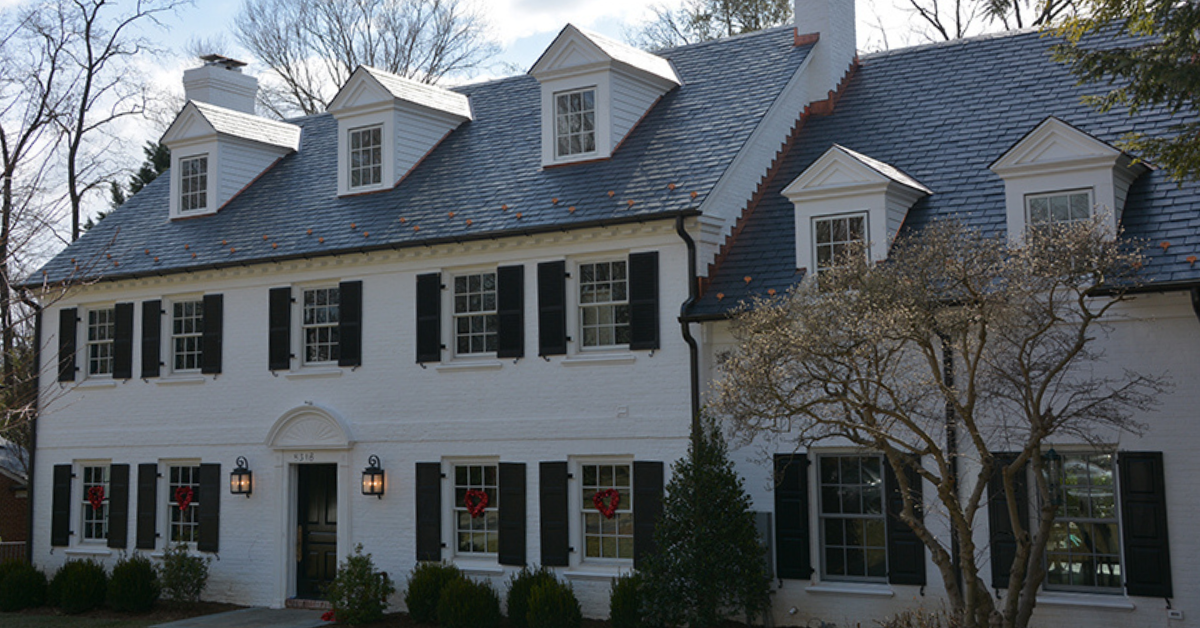
I can’t believe it’s not slate! Thinking about replacing your roof with slate but concerned about the cost and weight? The rhyme wasn’t intentional, but the tips we’ll be providing here are. Synthetic slate roofing has come a long way, so let’s take a look at what it offers (and where it falls short).
Natural slate has been a symbol of quality craftsmanship for centuries. But for most homeowners, the cost and structural demands of real slate put it out of reach. That’s where synthetic roofing comes in. Over the past decade, this product category has matured significantly, moving well beyond its early days of mediocre imitation into a viable roofing option. If you’re exploring roofing materials and wondering whether synthetic slate might be the right fit, this guide is for you. We’ll walk through what synthetic slate is, the advantages it offers, and the limitations you need to be aware of before committing.
What Is Synthetic Slate Roofing?
Synthetic slate (sometimes called composite slate) is a roofing material engineered to replicate the appearance of natural slate while offering a more practical profile. Most synthetic slate roofing materials are made from a combination of rubber, plastic, and post-consumer recycled content. Some manufacturers blend these with fiberglass reinforcement for added strength.
The distinction from natural slate is significant. Natural slate is a quarried stone product that is dense, heavy, and brittle. Synthetic slate, on the other hand, is molded into individual tiles designed to mimic the layered, varied look of real stone. Trusted brands like DaVinci Roofscapes and CertainTeed have built strong reputations in this category, and their products now offer performance that can go toe-to-toe with the classics.
The Pros of Synthetic Slate Roofing
- Lower cost than natural slate: One of the biggest draws of synthetic slate roofing is the cost advantage over real stone. Natural slate installation is expensive thanks to its weight and installation requirements. The synthetic slate roofing cost sits comfortably in the midrange: more than standard asphalt shingles, but considerably less than genuine slate.
- Lightweight and easier to install: Natural slate is one of the heaviest roofing materials available. Most homes aren’t built to support it without costly structural modifications. Synthetic slate roofing materials weigh a fraction of the real thing, which means they can often be installed on standard roof decking without reinforcement. This lighter weight also expands the pool of qualified contractors who can handle the job. Roof installation in Frederick, MD and surrounding communities benefits from this directly, as experienced roofers familiar with composite products are far more accessible than those trained in natural slate installation.
- Environmental benefits: Many synthetic materials are manufactured using recycled rubber and reclaimed plastics, making them an environmentally responsible choice compared to quarried stone. No mining or quarrying here, which reduces land disruption and the carbon footprint tied to extraction.
- Impressive durability (when you choose the right product): Today’s top-tier synthetic slate roofing materials have impressive track records. Premium products carry Class 4 impact resistance ratings, perform well in freeze-thaw cycles, and are tested to withstand high winds.
- Aesthetic options and improved appearance: Early synthetic slate products were easy to spot as imitations, imposters to be dismissed. That’s changed substantially. High-quality synthetic slate now offers nuanced color variation, realistic texture, and profiles that convincingly replicate the look of genuine stone.
The Cons of Synthetic Slate Roofing
- Higher upfront cost than asphalt shingles: Synthetic slate is a midrange investment, and can cost two to three times as much real slate, depending on the brand and complexity of the installation. If your budget is tight, this upfront cost can be a barrier even though the long-term value proposition may favor synthetic slate.
- Quality varies widely by brand: Some of the materials are better than others, and this is one of the most important things to understand before you start shopping. Lower-quality products may fade, crack, or fail to perform as advertised. The difference between a budget composite tile and a premium engineered product can be dramatic.
- Fire rating considerations: Synthetic slate products vary in their fire resistance ratings. Premium products earn a Class A fire rating (the highest available) while lower-end products may carry Class B or Class C ratings. This distinction matters for insurance purposes and, more importantly, your family’s safety.
- Longevity still unproven compared to natural slate: Real slate is one of the few roofing materials that can last over 100 years when you take good care of it (props to you if you manage to take care of anything for 100 years). Synthetic slate, even from the best manufacturers, simply doesn’t have that field data yet. Time will tell.
- Potential HOA or historic district restrictions: If your home is located in a neighborhood governed by an HOA or situated within a designated historic area, there may be restrictions on roofing materials and appearances. Some organizations require natural materials or specific aesthetics.
Synthetic Slate Vs. Natural Slate: A Quick Comparison
| Factor | Synthetic Slate | Natural Slate |
| Material cost | Moderate | Very high |
| Installation cost | Moderate | Very high (specialist labor) |
| Weight | Light to moderate | Very heavy |
| Lifespan | 30–50+ years (warranty) | 75–150+ years |
| Maintenance | Low | Low (if installed correctly) |
| Appearance | Very good (premium brands) | Authentic, inimitable |
| Environmental impact | Uses recycled materials | Quarried stone |
Is Synthetic Slate Right for Your Home?
Synthetic slate is a strong fit for homeowners who want the sophisticated look of a slate roof without the structural or financial demands of real stone. It’s particularly well-suited for homes that aren’t built to support the weight of natural slate, for budget-conscious homeowners comparing the synthetic slate roofing cost against alternatives, and for those looking to maximize curb appeal in a midrange investment tier.
Then there’s climate to consider. Maryland’s weather is about as reliable as a roof full of holes. Freeze-thaw cycles throughout winter and fall, occasional ice accumulation, and summer humidity all place demands on roofing materials. And don’t get us started on the “blizzard to sunny and back to blizzard again” days we get in the winter. Quality synthetic slate is engineered for exactly these conditions, though. When paired with proper installation and ventilation, it performs well in our sometimes frustrating weather conditions.
Why Work With a Local Roofing Expert
Understanding the differences between synthetic slate roofing materials on paper is only part of the picture. A qualified local contractor brings something a product data sheet can’t: real-world experience with how specific products perform on homes they service.
At PJ’s Roofing, our team has plenty of experience with synthetic slate and composite roof installation in Frederick, MD and the surrounding region. We help homeowners fully evaluate their options, and we only install products we would trust on our own homes. Whether you’re weighing roof installation options for the first time or replacing an aging roof, we’re here to help you make an informed, confident decision.
Ready to Explore Synthetic Slate for Your Home?
If you’re considering synthetic slate roofing or want to compare it against other options for your home, we’re ready to help. Get in touch to schedule a consultation with our team. We’ll walk you through the materials that make sense for your home, budget, and goals.
We can’t wait to talk slate!